Most people probably don’t think about math and poetry in the same breath, and that’s completely understandable. Math is usually more left-brain centered, while poetry comes from the more creative right-brain.
However, there are occasions when the two overlap. And, when they do, they create something beautiful.
Here’s what I mean.
I like to write syllabic poetry, where each line contains a predetermined amount of syllables. And, since math is nothing but numbers and sequences, I can use those to define the amount of syllables I use.
I’ve tried this with several different formulas, but the three I enjoy the most are The Fibonacci Sequence, the Triangular Sequence, and the Powers of 2.
The Fibonacci Sequence
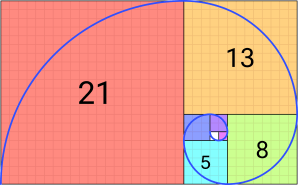
Discovered as early as 200 BC, the Fibonacci sequence didn’t rise to popularity until 1202, when Leonardo of Pisa (AKA Fibonacci himself) introduced it into Western culture.
In this sequence, the amount of each number is equal to the sum of the preceding two. So, visually, it looks like this: 1, 1, 2, 3, 5, 8, 13, 21, etc.
The Triangular Sequence
Also known as “Triangle numbers,” this sequence counts objects arranged in an equilateral triangle.
It’s difficult to explain in words, so I’ll add the diagram below so you can see how the numbers correspond to the shape. However, the sequence itself is simple enough- 1, 3, 6, 10, 15, 21, etc.

The Powers of 2
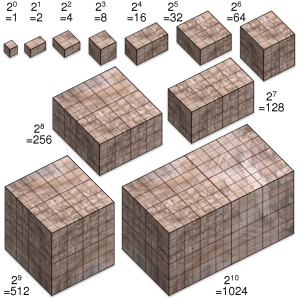
Also known as the base of the binary numeral system, the powers of 2 is a sequence often used in computer programming and other tech sciences.
The numbers increase by multiplying them by 2, so, on paper, it looks like this: 1, 2, 4, 8, 16, 32, 64, etc.
How to use Math in your Poetry
Since I’m used to writing syllabic poetry, I’ll use the numbers as a guide to tell me how many syllables each line needs. As a result, I can create unique, visual poems (like this one) while maintaining the emotional impact.
Or, if syllables aren’t your thing, you can always use the sequences to define the number of lines, different groupings, or how you rhyme. Honestly, the possibilities are endless!
Final Thoughts
It’s no secret that math and poetry aren’t usually friends. However, when they are, they create something beautiful!
These three sequences are the ones I like working with, but there are plenty more to choose from- such as Prime Numbers, the Lazy Caterer’s Sequence, Divisor Functions, and more. For a more complete list, check out this Wikipedia article!
Have you ever used math in your poetry? I’d love to hear about it!
Discover more from Erynn Crittenden
Subscribe to get the latest posts sent to your email.
 Erynn Crittenden